Length of Lesson: 60-120 minutes
- 10 minute warmup
- 10-70 minute video
- 10-15 minute discussion
- 15-20 minute case study
- Optional Activities:
- “Murrow’s Code” (20 minutes)
- Interactive quiz (20 minutes)
Learning Objectives
By the end of this lesson, students will be able to:
- Describe key events and contributions in Edward R. Murrow’s career.
- Evaluate how Murrow modeled ethics, integrity, and journalistic courage.
- Analyze how Murrow’s legacy informs today’s standards for truth in media.
- Reflect on how broadcast journalism shapes public opinion and social accountability.
- Recognize the impact of misinformation and sensationalism that Murrow warned against.
1. Pre-Video Activity (10 minutes)
Truth vs. Influence
- Write the following on the board: “We must not confuse dissent with disloyalty.”
- In pairs or small groups, students discuss:
- What do you think this quote means?
- Why might this idea be controversial in times of fear or political tension?
- Who today is considered a “truth-teller” in journalism, and why?
- Goal: This sets the tone for Murrow’s ethical stance and prepares students to think critically about media responsibility.
2. Play Videos
Edward R. Murrow: His Life & Legacy
“See it Now” broadcast on March 9 1954
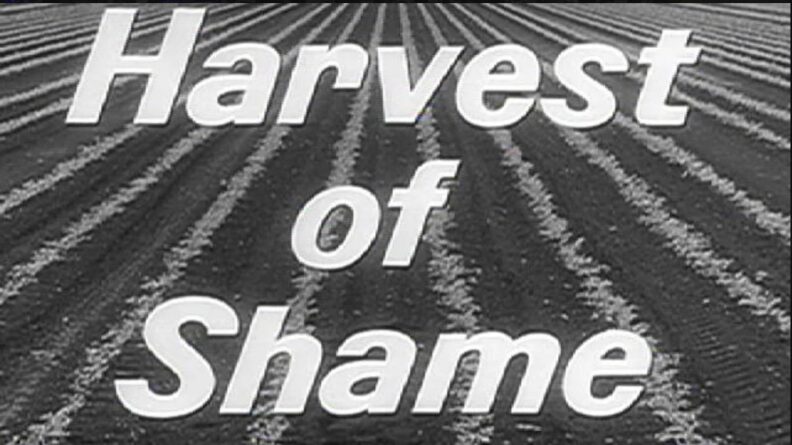
“Harvest of Shame” Murrow’s 1960 documentary
3. Post-Viewing Discussion Questions
Choose 6–8 of these questions based on your available time:
- How did Murrow’s upbringing shape his perspective as a journalist?
- What was the role of Ida Lou Anderson in helping Murrow develop his voice and confidence?
- What made Murrow’s wartime reporting so powerful and different from others?
- How did Murrow’s Buchenwald coverage demonstrate ethical responsibility in journalism?
- Why was his stand against Senator McCarthy so significant?
- What impact did the “Harvest of Shame” documentary have on public perception?
- What ethical challenges did Murrow face in balancing truth with public reaction?
- How does Murrow’s warning about television being used to “distract, delude, amuse” apply today?
- In what ways can a single journalist still influence public discourse or policy?
- What values from Murrow’s career do you think are most important for today’s media creators?
4. Classroom Activity
“Broadcast Ethics in Action” – Case Study Analysis
Students break into small groups. Each group is assigned a modern media scenario (e.g., whistleblower leaks, covering a protest, interviewing a controversial figure). They must:
- Decide how Murrow might have approached the situation.
- Outline how they would report it, including tone, framing, and responsibility to the public.
- Share their reasoning with the class.
Optional Activity 1: “Murrow’s Code” – Build a Modern Journalist’s Manifesto
Students reflect on Murrow’s values and quotes to create a “Murrow-Inspired Code of Ethics” for today’s digital journalists.
They list 5 guiding principles and defend their choices in writing or brief presentations.
Optional Activity 2 (optional or independent work): Interactive Quiz
After the discussion or as homework, students should take the following 10-question quiz to assess comprehension.
Instructors
Please take a few minutes to give us your feedback. Your input is greatly appreciated!
Lesson Developers

Brett Atwood
Associate Professor
Professor of Practice
Professor of Practice